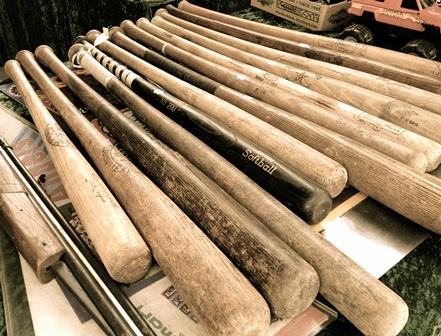
The baseball world has kept evolving in various aspects. Ranging from the attire, to the laws and even to the player’s kit, the change has been significant. Nevertheless, the one thing that has hardly changed is the baseball bat. You can hit on your local vendor of the baseball equipment when buying a bat and wonder what criteria to use in selection.
They all look of almost similar design and size. Some even have similar weight and almost similar color design. But then, they have varied prices. So, which one should carry the day? Let us consider a few factors before the selection.
The wooden bats
They can be regarded as the earliest types of bats. They are usually curved from wood or bamboo. Though they are slowly losing their earlier popularity, wooden bats are still embraced by many teams on grounds of cost and safety.
Distinguishing Features
PROs:
They cost relatively cheaper than composite bats.
They are lighter.
Being the earliest; they have the highest variety of shapes, sizes and designs.
They do not need a break-in period. You just buy it, rush to the field and the bat will behave as if you have had it for ages.
Are more durable unless spoilt by mishits.
CONs:
They are less forgiving when compared to composite bats. You only need a few mishits to get a notch on the side of your bat. Just one silly mistake, and your new bat spoils before your buddies.
Require much accuracy on hitting than composite bats. If you make a 1/8 inch mistake, it will magnify it for the world to view.
The composite bats
They are among the newest trend of bats in the market. Composite bats are mainly made of aluminum alloy. The players who have interacted with them often brag of durability and fault tolerance.
Distinguishing Features
PROs:
They are more forgiving than wooden bats.
Have an almost similar look with aluminum bats but are often “calm”; i.e. do not release the “ping” sound on hitting and lighter than most wooden bats.
Best suited for softball players.
They are usually made with awesome art and designs.
CONs:
They are relatively expensive when compared to wooden bats.
Unlike wooden bats, new composite bats require a break in period of about 150-200 hits. This could discourage a novice to baseball.
Composite bats have a trampoline effect owing to a double wall construction of the bats. Thus, they often have a slight delay between the time of impact and the time of release. More the compisite bat here
The Contrast: Wooden or composite?
Cost: obviously, among the first things to check from the bats vendor is the cost of the bat then contrast it with your wallet. For baseball newbies and those working on a tight budget, it is recommended that one takes a wooden bat. They are cheapest and often the most available. Besides, their feature of little tolerance can work to train a beginner of precision. As a matter of fact, it becomes easier for a player that uses a wooden bat to change to a composite bat than vice versa.
Durability: both the two types of bats have a certain degree and type of durability. However, for an expert player, a composite bat is more preferable over a wooden bat. Mainly because it can tolerate some mistakes.
Verdict: In baseball, there is no such thing as a “good bat than yours”. All bats are equally awesome. The decision as to which bat best serve your interests; rests on your hands. With regular practice trial and error with various types, you can determine the most favorite. The deal is done.
